See the scene.
Develop calibrated visible and thermal sensing packages for inspection, agriculture, infrastructure and observation payloads.

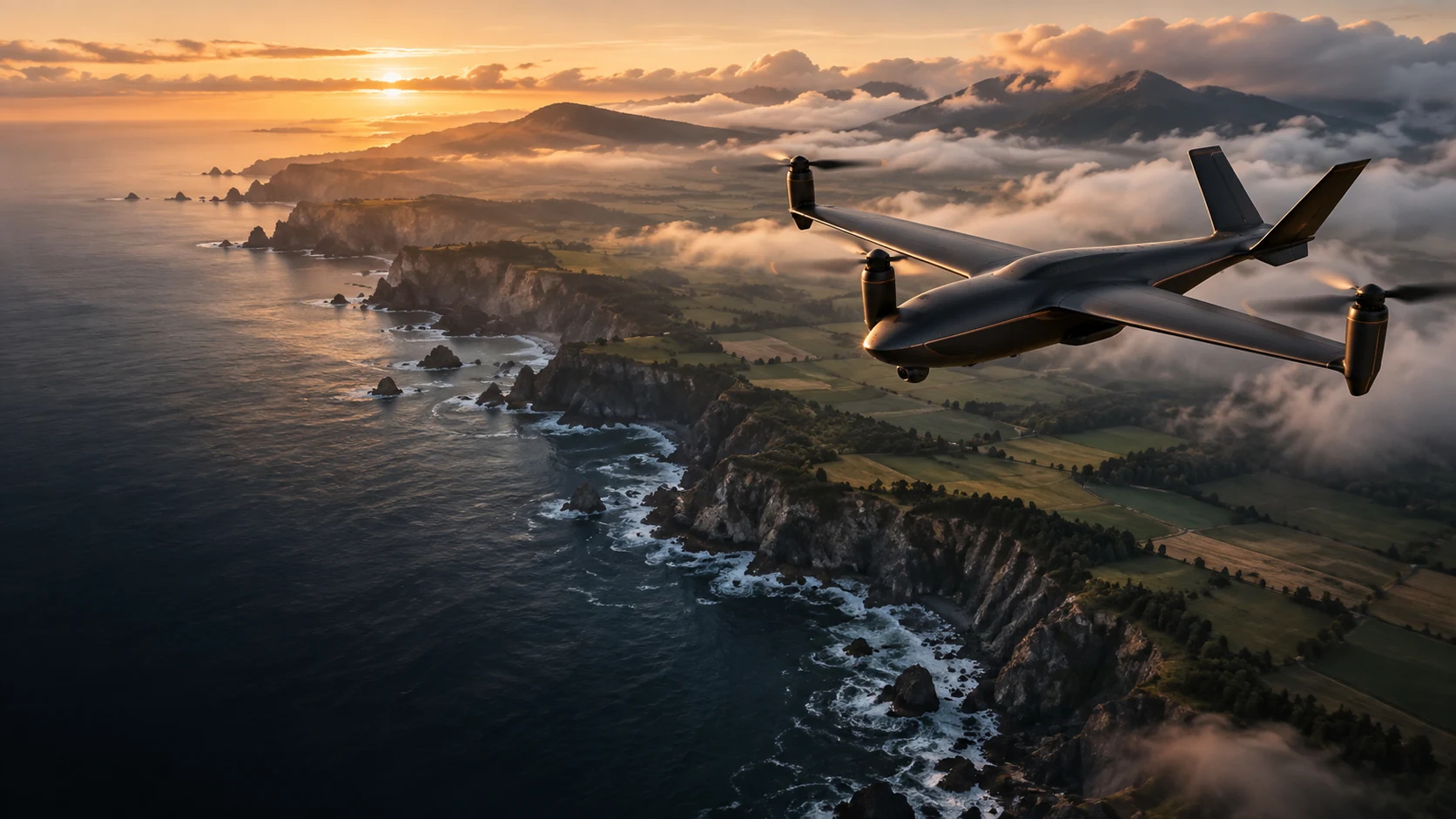 Design concept · Development program
Integrated sensing for machines that observe, navigate and operate in the physical world.
Our sensing program brings imaging, range, motion and position into a common device architecture. The first engineering task is reliable, synchronized capture.
Prototype kits prioritize off-the-shelf USB sensors and serviceable enclosures. Custom boards and sensor modules follow once the interfaces and workloads have been measured.
Develop calibrated visible and thermal sensing packages for inspection, agriculture, infrastructure and observation payloads.
Combine range, movement and location measurements, retaining timestamps, calibration records and the uncertainty of each source.
Investigate numerical representations that continue estimated signals after a feed goes dark, clearly separating predictions from measured observations.
Defeated AI contributes the proposed provenance and source-attribution layer. Archetypal AI contributes governance: permitted uses, model approval, uncertainty limits and operator review.
Source authenticity does not prove that a predicted scene is correct. Reconstruction quality must be tested against independent measurements, with a clear transition between observation and simulation.