A better perspective.
Develop modular drone payloads for observation, crop assessment and infrastructure inspection. Validate payload mass, endurance and sensing performance together.

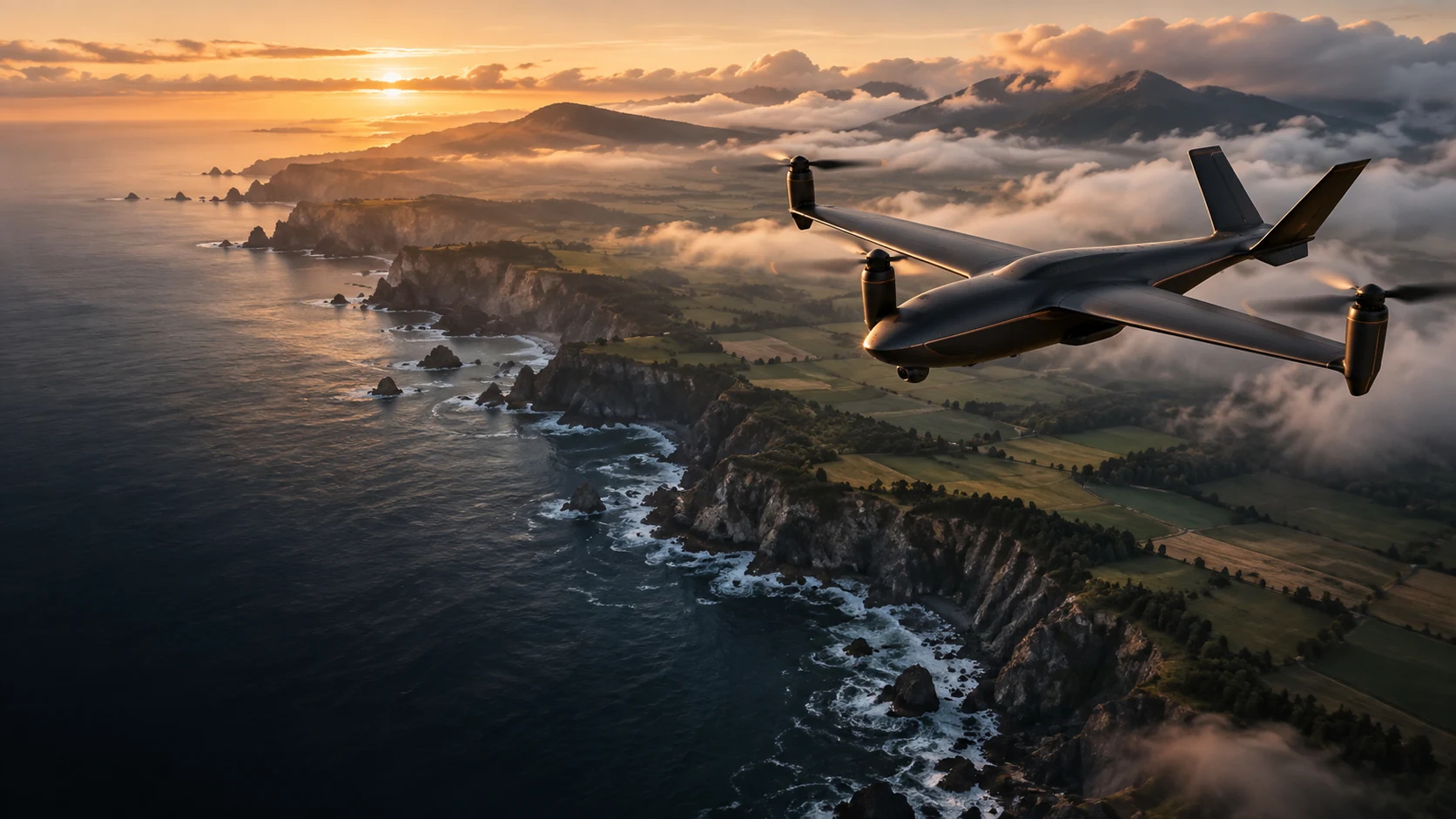 Design concept · Development program
Drones, rovers and fixed-site hubs—developed around a common sensing, compute and power foundation.
Tectivum is the physical systems layer: enclosures, sensing packages, electronics, power and vehicle integration. Our initial architecture uses a common electronics stack with mission-specific mounting and environmental protection.
Agriculture, maritime observation, infrastructure inspection and authorized government missions provide concrete environments for evaluation.
Develop modular drone payloads for observation, crop assessment and infrastructure inspection. Validate payload mass, endurance and sensing performance together.
Integrate rover sensing and edge compute for repeatable field data collection, site inspection and environments where aerial observation is insufficient.
Develop persistent local sensing hubs, including solar-assisted concepts. Establish power budgets, maintenance access and clear operator review before deployment.
Preserve the mathematical state of an observed scene and investigate how a virtual sensor stream can continue during a disconnection. Reconstruct a view when an operator needs it.
A second research track initializes a scene from external sensors’ prior observations. Both tracks retain source timestamps and uncertainty, and compare their predictions with independent measurements when observation resumes.
Research objective: continuity of a represented observation. Unobserved changes remain estimates.